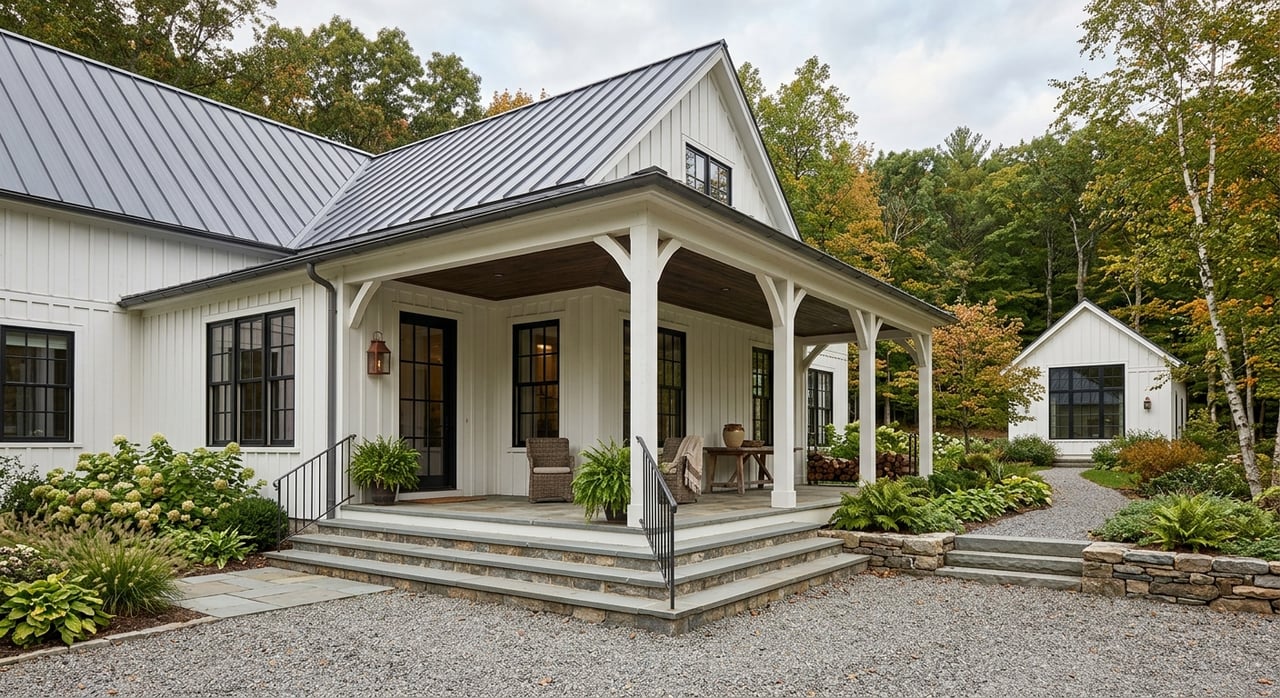
Is Leipers Fork the Right Country Retreat Near Franklin?
July 2, 2026
July 2, 2026
Looking for a place that feels tucked away without feeling cut off? Leiper’s Fork offers a rare mix of preserved countryside, creative energy, and easy access to Franklin. If you are exploring Williamson County and want a quieter pace with real character, this guide will help you understand what makes Leiper’s Fork stand out. Let’s dive in.
Leiper’s Fork is best understood as a preserved country village near Franklin, not a typical suburb. Williamson County’s planning framework treats villages like this as places with historical significance, compact development patterns, limited infrastructure, and growth pressure.
That matters when you are thinking about buying here. The area’s identity is shaped by preservation, not rapid suburban expansion. You will notice that in the village layout, the older buildings, and the way the surrounding landscape still feels open and rural.
The village also has deep roots. County planning documents trace Leiper’s Fork to late-1700s settlement, an 1818 post office, and a 1911 subdivision that still helps define the village grid today.
One reason Leiper’s Fork feels so distinct is that its historic character has been intentionally protected. Williamson County adopted the Leiper’s Fork Village District Standards in 2012, and those standards became part of the zoning ordinance in 2013.
The Leipers Fork Historic District is also listed on the National Register of Historic Places. That helps explain why the village streetscape feels preserved and cohesive rather than overbuilt or heavily altered.
For you as a buyer, this can shape both the experience and the expectations. The area is not trying to become something else. It is a village with an established identity, and that identity is a big part of its appeal.
Daily life here blends quiet scenery with a social, lived-in village center. Leiper’s Fork is known for galleries, antiques, live music, local whiskey, and small businesses that give the area personality without making it feel staged.
Fox & Locke, founded in 1947, remains a central gathering place for Southern meals and live music. Spots like Country Boy Restaurant add to that familiar small-town rhythm, while Leiper’s Fork Distillery brings small-batch whiskey into a historic log home setting.
The arts scene is part of everyday life here too. Leiper’s Creek Gallery showcases established artists and includes a porch, fire pit, and lawnchair theater, while Patina Home & Garden combines antiques, flowers, home goods, and community programming.
If you want a place where a simple weekend can include breakfast in the village, an afternoon browsing shops, and an evening with live music, Leiper’s Fork delivers that naturally. It feels social and creative, but still relaxed.
One of the most important things to understand is that Leiper’s Fork offers two related but different experiences. There is the walkable village setting, and then there is the broader Leiper’s Fork community beyond the village boundary.
The county zoning reflects that difference. In the Village Core Subarea, the minimum lot area is 10,000 square feet. In the General Village Subarea, the minimum lot area is 1 acre.
That means your lifestyle can vary a lot depending on where you buy. If you want to be closer to the village center, your property experience may feel more compact and connected. If you are drawn to surrounding acreage, you may find more space, more privacy, and a stronger rural feel.
This is where local guidance matters. A home with a Leiper’s Fork address can offer a very different day-to-day experience depending on its setting, land use, and distance from the village core.
In Leiper’s Fork, land is often about more than size alone. The story here is closely tied to stewardship, preservation, and the long-term care of the landscape.
Williamson County’s Greenbelt rules are important if you are considering acreage. Agricultural land must be at least 15 acres and must be actively used for agriculture, while forest land and open-space land can also qualify under county rules.
Conservation also plays a visible role in the area. The Land Trust for Tennessee reported that its first Leiper’s Fork easement protected 224 acres of rolling pastureland along the Natchez Trace Parkway, and it later reported work with more than 15 landowners in the area to protect over 2,500 acres.
A conservation easement is a voluntary, permanent agreement that limits development and subdivision while allowing the landowner to keep ownership. Depending on the easement terms, owners may also retain certain use rights.
If you are exploring land purchases here, these details matter. Two properties with similar acreage may come with very different possibilities depending on zoning, land use, and any preservation agreements in place.
A retreat does not have to mean remote. Leiper’s Fork is about 8 miles from Franklin and about 30 miles southwest of Nashville, with Visit Franklin placing the drive at roughly 40 minutes via I-65 South and State Route 46.
That balance is part of the appeal. You can enjoy a quieter setting and still stay connected to Franklin’s shopping, dining, and services, along with the broader job and entertainment access of the Nashville area.
For many buyers, that makes Leiper’s Fork feel practical as well as charming. It offers breathing room without asking you to give up convenience.
The nearby Natchez Trace Parkway strengthens Leiper’s Fork’s identity as a country retreat. The National Park Service describes the parkway as a 444-mile scenic road through three states with opportunities for hiking, biking, horseback riding, and camping.
For you, that can translate into an easy connection to outdoor recreation and scenic drives right near home. The natural setting is not just a backdrop here. It is part of the lifestyle that draws people to this part of Williamson County.
If your ideal home search includes privacy, views, and access to open landscape, Leiper’s Fork offers a setting that feels hard to replicate. It is peaceful, but it still has a real community pulse.
Leiper’s Fork tends to appeal to buyers who want something more distinctive than a standard neighborhood pattern. You may be drawn here if you value scenery, character, local businesses, and the idea of a home that feels connected to the land.
It can also be a strong fit if you are relocating and want a better feel for the lifestyle options around Franklin. Some buyers want a more polished in-town setup, while others are looking for space and a slower rhythm. Leiper’s Fork often speaks to the second group.
At the same time, it helps to go in with clear expectations. This is not a conventional suburb with uniform development. It is a preserved village and rural community where location, lot type, and land restrictions can shape the buying decision in a big way.
Because Leiper’s Fork has a unique planning framework, buying here benefits from local insight. The difference between village core living and surrounding acreage is not always obvious from an online listing alone.
You may need help looking beyond square footage and price. Zoning, land use, preservation context, access, and lifestyle fit all play a role in whether a property truly matches what you want.
That is especially true if you are comparing Leiper’s Fork with Franklin or other parts of Williamson County. The right choice depends on how you want to live, not just where you want to land on a map.
If you are considering a move in Williamson County and want help weighing Leiper’s Fork against other local options, Megan Smith can guide you with clear advice, local perspective, and a process that keeps your goals front and center.
Stay up to date on the latest real estate trends.

Finding a home that is right for my client’s budget, lifestyle and personality is a responsibility I take seriously. Clients can expect my experience in evaluating market conditions and my proven negotiating skills will bring us the best outcome.